Clarifying Your Board Game Collection Goals
Before you add more boxes to your shelf, think of your hobby as a simple Board Game Collection Guide rather than a random pile of titles. Start by asking who will actually play: kids and adults together, a couple, or a regular game group. If you expect casual players, focus on beginner tabletop games that teach rules quickly and feel rewarding on the first try. Picture an ideal game night and decide whether you want light conversation, focused strategic play, or a mix of both. These preferences shape which games you choose and help you avoid buying titles that rarely leave the shelf.
Time is another practical part of setting goals, and a basic game length comparison keeps expectations realistic. If your group usually has about 45 minutes after dinner, multiple long strategy games may not fit your routine, while shorter sessions will see more play. Decide whether you prefer a small, curated collection you know well or a broader library that lets you experiment with different styles. Clarifying these points early makes it easier to judge new purchases and organize your shelves around the experiences you care about most, instead of just chasing whatever happens to be popular.
Building a Foundation of Beginner-Friendly Tabletop Games
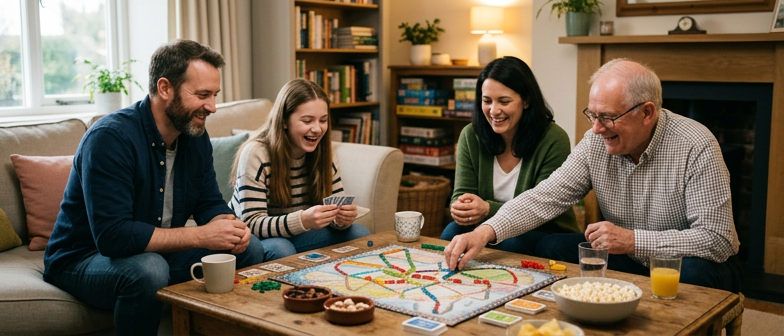
When you start a board game collection, beginner-friendly tabletop games create an easy entry point for everyone at the table. Games that work well for a relaxed family board game night usually share a few traits: clear rules that can be explained quickly, turns that follow a simple pattern, and play times short enough that people do not feel locked in for the entire evening. Many new players appreciate familiar themes, such as building a small town, caring for animals, or solving a light mystery, because these settings feel welcoming and reduce the pressure of learning complex systems. Including titles that introduce basic strategy concepts, like weighing risk against reward or planning one turn ahead, helps new players understand strategy game basics without overwhelming them with dense rules or heavy competition.
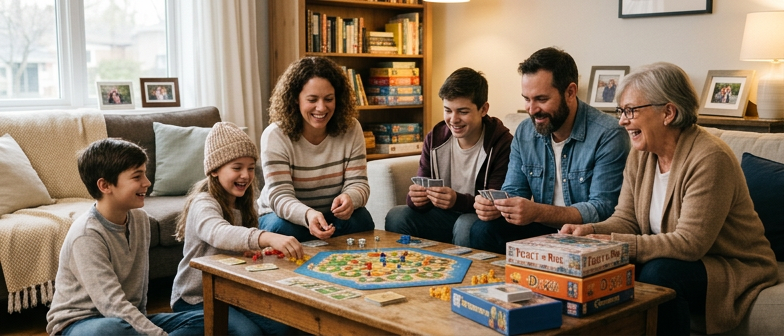
When choosing beginner tabletop games for groups with mixed experience, focus on designs that keep everyone involved and minimize long stretches of waiting. Games that use simultaneous actions or quick turns let children, teens, and adults stay engaged together, which supports a more social, conversation-friendly atmosphere. Cooperative or team-based titles also help, because experienced players can guide newer ones without turning game night into a lesson or a one-sided contest. As your group becomes more comfortable, gradually mix in slightly deeper strategic games that still finish in a reasonable time and offer straightforward scoring. This step-by-step approach builds a foundation where casual players feel confident and your collection grows in a direction that continues to welcome new people to the table.
| Key Trait | Family Board Game Night | Casual Friends | Mixed-Experience Group |
|---|---|---|---|
| Clear, quick-to-teach rules | High suitability | High suitability | High suitability |
| Short, flexible play time | High suitability | Medium suitability | High suitability |
| Familiar, welcoming themes | High suitability | Medium suitability | Medium suitability |
| Basic strategy game concepts | Medium suitability | High suitability | High suitability |
| Cooperative or team-based play | High suitability | Medium suitability | High suitability |
Learning Strategy Game Basics Without Overwhelming New Players
In a Board Game Collection Guide, treat beginner tabletop games as a gentle entry into strategy rather than a full test of skill. Choose titles built around one clear idea, like placing pieces on a grid, collecting sets, or managing a small pool of resources, so new players see how decisions shape outcomes without tracking many rules. During a family board game night, explain the goal first, then walk through a short sample turn using everyday terms such as blocking, advancing, or trading. Encourage planning just one or two turns ahead instead of diving into complex long term tactics. Keeping rules light and choices visible builds basic strategic thinking and makes moving to deeper games feel like a natural step instead of something intimidating.
Planning for Family Board Game Night
Planning a regular family board game night starts with matching games to the people around your table. Consider ages, reading ability, and how long everyone can focus before losing interest. Beginner tabletop games with simple rules and clear turns work well for children and new players because they minimize explanations and let everyone start quickly. Decide in advance how long you want to play, using game length comparisons on the box or online so you do not pick a long strategy title when you only have thirty minutes. Keeping a small rotation of easy-to-teach games ready makes the evening predictable and encourages frequent game nights.
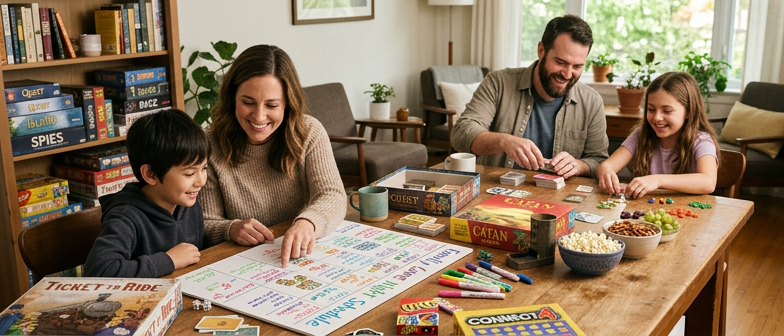
Organizing the flow of family board game night helps it become a normal home routine. Pick a consistent time, clear a stable surface, and keep suitable games stored nearby so you are not hunting through your growing board game collection. Grouping boxes by how long they take to play lets you grab a short option on busy weeknights and save deeper choices for weekends. As your household gains confidence with the basics, you can gradually add titles with more strategy while still having reliable beginner games available. By planning around attention spans, time available, and accessible choices, game night stays relaxed and repeatable instead of feeling like a complicated event.
Matching Game Length and Complexity to Family Schedules
When planning a Family Board Game Night, compare each game’s estimated play time and complexity with the time you actually have. Treat the Game Length Comparison on the box as a flexible range, especially for larger groups or beginners. Short, simple games that finish in about thirty minutes suit busy school nights, while longer, more strategic titles fit relaxed weekends or holidays. Thinking about how tired people will be, how many rules they want to learn, and whether you prefer one longer experience or several quick rounds helps you choose games that keep the evening fun and realistic for your schedule.
Adding Cooperative and Strategy Games to Your Collection
As you move beyond party titles and beginner tabletop games, cooperative board games and more strategic experiences give your collection greater depth. Cooperative designs ask players to work together toward a shared objective, which often suits family board game night because the focus is on communication, planning, and problem solving instead of beating one another. Many cooperative titles use clear turn structures, open information, and simple actions, so newer players can participate without feeling pressured to optimize every move alone. In a board game collection guide, these collaborative games are often recommended as a bridge between very light entertainment and more involved systems, since they teach teamwork and coordination while still feeling approachable.
Strategy game basics become important once your group is ready for more deliberate decision-making and long-term planning. Strategic games usually emphasize resource management, positioning, and evaluating tradeoffs, and they reward paying attention to opponents and thinking a few turns ahead. When choosing such titles, consider how complex the rules are and how long a typical session lasts. Adding a mix of accessible strategy games lets you rotate between cooperative challenges and competitive planning, so your collection can support different moods and group sizes without overwhelming players who are still learning how deeper strategy works.
Q&A
-
How can I set clear goals for my board game collection instead of buying random titles?
Think about who will usually play, how much time you have, and whether you prefer light conversation or focused strategy. Use those preferences as a simple Board Game Collection Guide before adding new games. -
What makes a good beginner tabletop game for a relaxed family board game night?
Look for clear rules, short play times, and familiar themes. Games that use basic decisions, like choosing between safe and risky moves, help introduce strategy without overwhelming new players. -
How can I teach strategy game basics without intimidating my family?
Start by explaining the game’s goal, then walk through a sample turn. Focus on one main idea—such as placing pieces on a board or collecting sets—and encourage planning just a turn or two ahead. -
How do I match game length and complexity to our family schedule?
Use the Game Length Comparison on the box as a rough guide, then adjust for group size and experience. Short, simple games fit busy evenings, while longer, more complex titles work better on weekends. -
Why add cooperative board games to a growing collection?
Cooperative board games can ease the move from party games to deeper strategy. They emphasize teamwork, shared problem solving, and communication, which often suits mixed-age family groups.