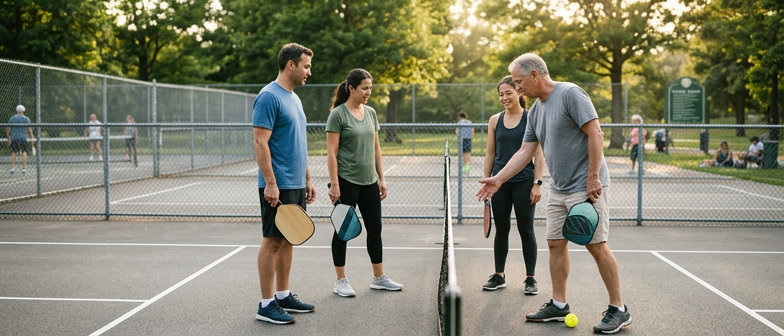
Why Court Etiquette Matters in Pickleball
Pickleball court etiquette is about more than being polite; it is a practical framework that keeps games safe, fair, and enjoyable for everyone. In a fast-growing sport where beginners share space with experienced players, simple habits like announcing the score clearly, calling balls honestly, and waiting to enter until a rally ends help prevent confusion and collisions. This kind of recreational sports courtesy also reduces frustration, because players know what to expect and can focus on playing rather than arguing about points or boundaries.
For anyone using a pickleball beginner guide to learn the game, understanding these basics early makes it easier to join open play or community ladders with confidence. Courteous behavior shows respect for shared equipment, limited court time, and the wide range of skill levels in casual games. It also supports the culture of the sport, where inviting others into a rotation, thanking partners and opponents, and matching your intensity to the setting help create a welcoming environment for new and returning players.
Core Pickleball Court Rules and Etiquette
Understanding the difference between formal pickleball court rules and everyday etiquette helps new players feel comfortable as soon as they step on court. Official rules explain how points are scored, where you may stand, and what counts as in or out, while informal expectations focus on how you treat partners, opponents, and nearby courts. Together these basics of pickleball court etiquette keep recreational games safe, orderly, and enjoyable so beginners can join open play, rotate into games, and participate with confidence and courtesy.
On the rules side, players are expected to follow standard pickleball court rules such as calling the score before every serve, respecting the non-volley zone, and using the correct serving rotation. Clear and honest line calls are a key part of good pickleball game etiquette, and many groups ask players to give opponents the benefit of the doubt on close balls. Recreational sports courtesy also means returning balls to neighboring courts safely, not arguing about every point, and accepting that mistakes and disputed calls will happen, often settling disagreements by replaying the point.
Etiquette also covers how you share the court and interact with others. In many open play situations, players rotate on and off according to local customs, so asking politely about the order shows respect for those who arrived earlier. Thanking opponents after a game, encouraging partners, and briefly apologizing if you hit someone with the ball are small gestures that reflect good behavior. Simple habits such as keeping your voice reasonable, avoiding coaching during points unless asked, and being on time for your turn help create a welcoming environment for new and experienced players alike.
| Checklist Item | Main Purpose | When to Focus | Priority Level |
|---|---|---|---|
| Call score clearly before serving | Reduce confusion and disputes | Every rally start | High |
| Check everyone is ready to receive | Support safe, fair serves | Casual and beginner games | High |
| Respect non-volley zone rules | Maintain safe positioning | During net play | High |
| Make honest, calm line calls | Keep play fair and friendly | Close or disputed balls | Medium |
| Share courts and follow rotation | Include others in open play | Busy recreational sessions | Medium |
| Keep voice moderate and comments positive | Create a welcoming atmosphere | Mixed-skill or social games | Medium |
Respecting Space, Safety, and Equipment
A core part of pickleball court etiquette basics is moving around the courts without disrupting play. Enter and exit only between points, and wait at the gate instead of walking behind players during a rally. If your ball rolls onto another court, call out, wait for their point to finish, then retrieve it by walking around their play area so everyone stays focused and safe.
Recreational sports courtesy also means paying attention to safety and shared equipment. Before crossing a court, make eye contact so players see you, and avoid swinging your paddle or tossing balls in crowded walkways. When using community paddles or balls, return them to the right place, check for obvious damage, and treat nets, lines, and benches carefully so the courts stay welcoming for everyone.
Serving, Scoring, and Rotation Etiquette
On a pickleball court, good manners start with how you handle the serve. Core pickleball court rules require an underhand serve from behind the baseline, sent diagonally into the correct service box, but etiquette keeps this process calm and clear. In recreational play, make sure both opponents are ready, avoid surprise serves, and keep your motion steady so rallies feel fair. A quick nod, brief eye contact, or saying ready is enough to show everyone is prepared, which fits the spirit of a friendly pickleball beginner guide rather than a win at all costs mindset.
Announcing the score clearly before every serve is one of the simplest parts of pickleball game etiquette and prevents most arguments. In casual doubles, use the standard format by calling the serving team’s score, the receiving team’s score, and then the server number. Speak loudly enough for everyone to hear, and repeat the score if anyone looks unsure. When players disagree about the count, it is courteous to pause, review the last few rallies together, and reset the score calmly instead of rushing to keep playing.
Respectful serving order and rotation help doubles stay organized. Partners decide who serves first, then follow the usual pickleball serving order so no one receives extra turns. When your team wins the serve, move to the correct side according to your team’s score, and switch positions only when the rules allow so court coverage stays clear and safe. In relaxed recreational sports, it is polite to remind partners and opponents about who serves next or where to stand, gently guiding newer players so everyone can enjoy a smooth, welcoming game.
Announcing the Score and Handling Disputes
Clear score calling is a basic part of pickleball game etiquette and keeps play smooth and friendly. The server should announce the score before every serve, speak loudly enough for all players to hear, and use the standard order of server score, receiver score, and, in doubles, the server number. A brief pause allows anyone confused to ask for clarification and helps prevent misunderstandings.
When players disagree about whether a ball was in or out or who should be serving, good recreational sports courtesy means responding calmly. Stop play, restate each side’s view, and if no agreement is possible, choose the fairest option, such as replaying the point. Avoid raised voices or blaming, accept that close calls happen, and, when uncertain, give opponents the benefit of the doubt so everyone enjoys the match.
Doubles Positioning and Partner Communication
In doubles play, good positioning is a core part of basic pickleball court etiquette because it keeps rallies organized and safer for everyone. A common Pickleball Beginner Guide tip is for partners to line up side by side, whether they are returning serve or moving toward the non-volley zone. Staying roughly parallel to your partner helps you cover the court as a team instead of chasing the same ball or leaving big open spaces, which supports fair and enjoyable play for your opponents.
During a point, doubles positioning should match the flow of the rally. After a serve and return, partners usually move together toward the kitchen line, then shift left or right in small steps so no one is stranded in the middle or stuck behind the baseline without support. This shared movement respects basic Pickleball Game Etiquette because it reduces accidental collisions, avoids cutting off your partner’s shot, and makes it easier to follow court rules about where each player should stand before and after the ball is struck.
Clear, polite communication connects positioning with good sportsmanship. Call “mine,” “yours,” or “switch” in a calm voice, and confirm the serving order or who covers lobs before each rally to prevent confusion and missed balls. When partners talk through roles and respond respectfully to mistakes, they create a cooperative atmosphere that matches the spirit of recreational sports courtesy and gives beginners a simple guide to learning doubles teamwork without unnecessary pressure.
Q&A
-
Why does basic pickleball court etiquette matter for recreational play?
It keeps games safe, fair, and calm. Habits like waiting to cross courts, calling out loose balls, and respecting turn order let everyone enjoy rallies instead of arguments. -
How do formal pickleball rules differ from everyday court etiquette?
Rules cover scoring, serving, and what is in or out. Etiquette focuses on behavior: how you treat partners and opponents, rotate into games, and share limited court space politely. -
How should players handle serving order and score calling in casual games?
Agree on serving order before starting. The server clearly calls the score each point—server score, receiver score, then server number—and pauses so anyone confused can ask. -
What are key basics of doubles positioning and partner communication?
Stand side by side, move together toward the non-volley zone, and call shots early. Decide who covers lobs and middle balls to avoid collisions and open gaps. -
How can a beginner show good pickleball game etiquette right away?
Arrive on time, bring your own gear, wait for rallies to end before walking near courts, and thank others after games. Stay calm on close calls and use a friendly tone.